The Pacing Pitfall in High-Volume Plate Stacking
Scaling multi-part mechanical products to batches of 20 complete units exposes a hidden trap in additive manufacturing workflows. Slicing teams often load plates to maximum bed density, packing seven distinct part types across eight build sheets in strict CAD assembly order. When printers run those jobs in sequential plate sequence, machine queues stall immediately. Structural mainplates taking 14 hours tie up primary beds, leaving assembly technicians waiting for base plates while bins fill with unattached snap latches and accessory covers.
True production throughput depends on takt-aligned plate rotation rather than maximum bed packing. By calculating individual component cycle times and organizing build sheets around synchronized completion milestones, a multi-machine workshop eliminates downstream staging delays. Operators clear plates with predictable intervals, moving hardware directly from wash and cure or deburring racks straight into sub-assembly bins.
Need the CAD Stage Mapping Workflow?
Review our guide on isolating mechanical joints, wear latches, and structural housings before grouping plates.
Operational Failures in Unbalanced Batch Queuing
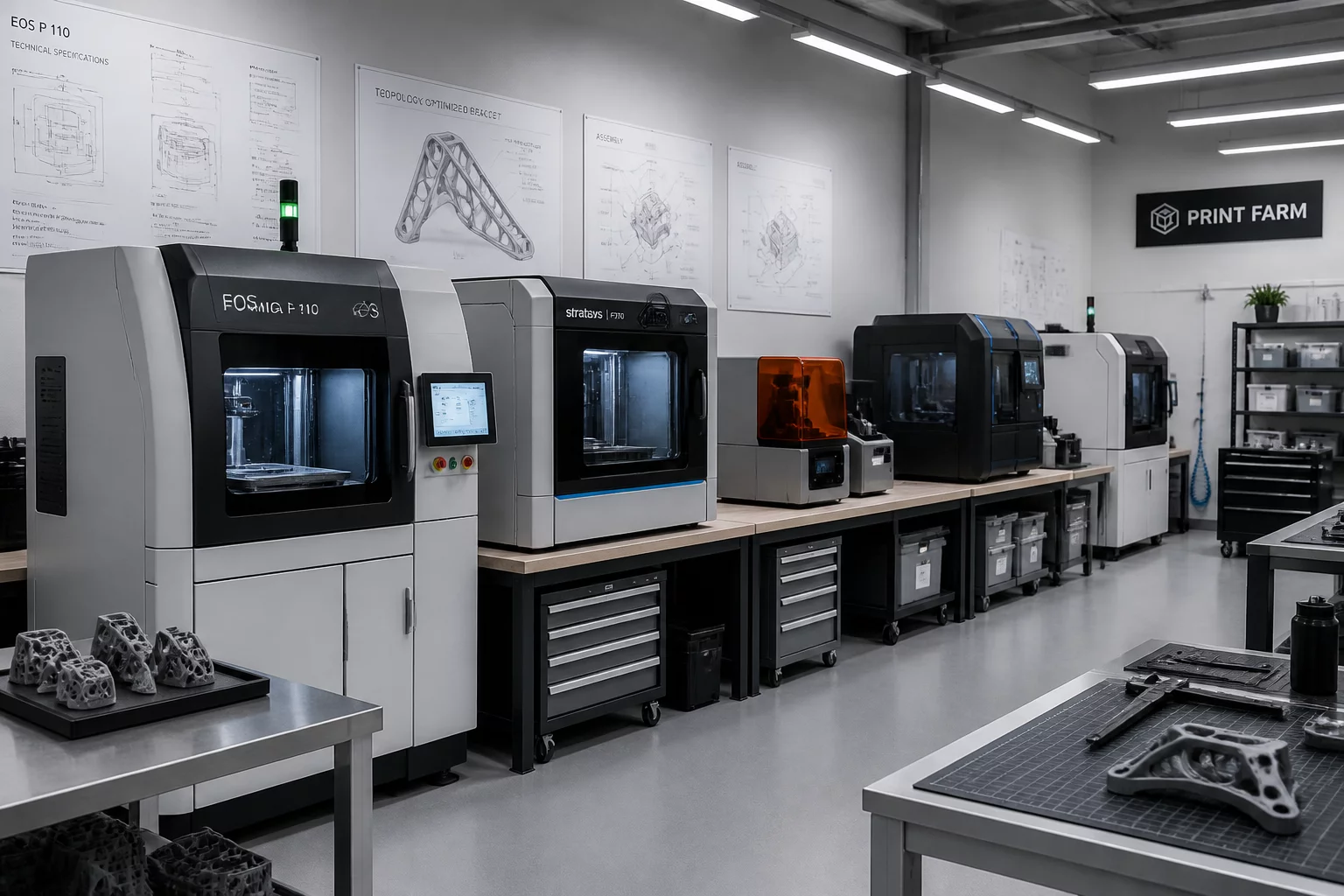
Unsynchronized scheduling introduces severe production friction across small print farms. Inexperienced teams frequently experience three recurring bottlenecks:
- Chassis starvation where lengthy structural bed cycles prevent assembly lines from completing initial mechanical enclosures.
- Staging shelf overflow caused by rapid printing of secondary clips and brackets days before the corresponding primary housings exist.
- Catastrophic print failures during overnight runs that wipe out mixed-geometry beds and contaminate batches of unrelated components.
"Printing twenty units sequentially by file plate order turns rapid prototyping hardware into a fragmented warehouse of half-finished assemblies."
— Marcus Thorne, Lead Operations Specialist
Synchronized Cell Rotation and Day-Night Pacing
Achieving steady continuous throughput requires splitting multi-plate project files into dedicated diurnal time buckets. High-speed, high-density plates containing short-duration parts under 3 hours belong strictly to daytime shifts where print operators can clear sheets and reboot jobs immediately. Heavy structural chassis plates requiring 8 to 11 hours are scheduled exclusively for overnight windows.
When allocating across a cluster of four machines, assign two printers permanently to structural main components and two printers to secondary mechanisms and friction clips. This balance yields twenty fully matched kits simultaneously at scheduled weekly release points, eliminating mismatched work-in-progress inventories and keeping shop floors cleanly organized.
Frequently Asked Batch Scheduling Questions
Scheduling plates with 8 to 11-hour runtimes during unattended night shifts prevents printer downtime, while scheduling 1 to 3-hour plates during active workshop hours allows immediate plate clearing and minimal idle time.
For high-stress friction clips or delicate interlocking teeth, run a dedicated +10% overage batch on day one. This isolates risk and eliminates having to interrupt structural plate production later for single-part reprints.
Studio handles plate arrangement within the project file, but farm pacing requires manual job queuing or farm management tools to ensure each machine receives matched plate subsets that complete simultaneously.