Failure Isolation in Multi-Plate Additive Workflows
Packing twelve disparate components onto a massive nine-hour tray creates a fragile operational bottleneck where one lifted snap clip ruins an entire cycle. Segregating high-risk geometries, fragile hinge tabs, and tight-tolerance interfaces onto dedicated recovery plates prevents operators from running four hundred grams of plastic just to replace one four-gram retaining latch.
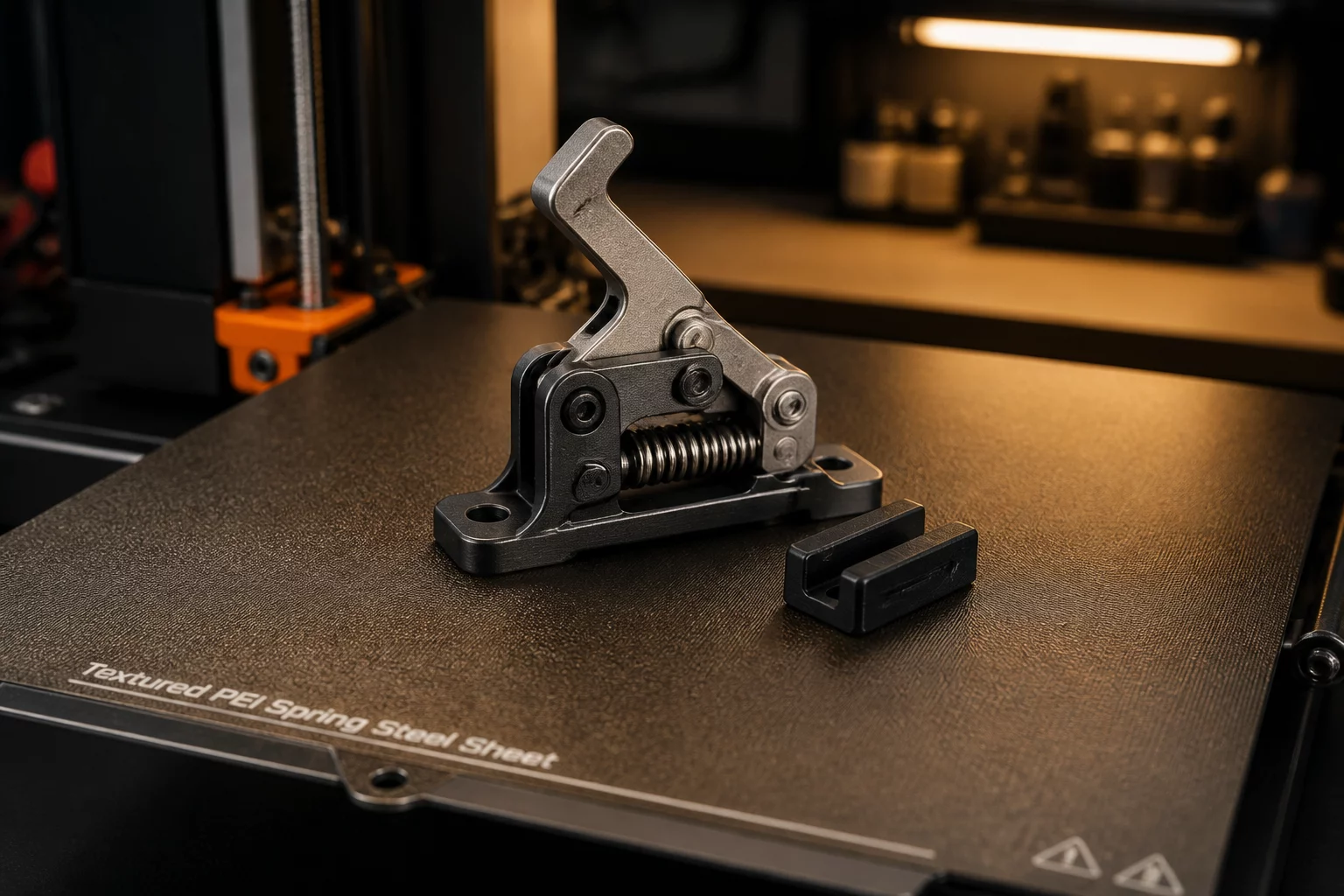
Isolation Thresholds by Geometry & Failure Mode
Assigning project parts to specific plates requires balancing print runtime against the probability of localized adhesion defects and post-assembly mechanical breakage.
| Parameter | Configured Value | Operational Guidance |
|---|---|---|
| Maximum Recovery Runtime | < 25 Minutes | Dedicated recovery plates must finish within half an hour to prevent stalling downstream assembly benches. |
| Aspect Ratio Isolation Boundary | > 6:1 Height-to-Base | Tall slender levers and thin alignment pillars must run on secondary plates away from heavy base enclosures. |
| High-Wear Component Allocation | Plate 03 (Dedicated) | Snap-fit cantilevers and threaded plugs should always populate separate trays with 3x redundancy batches. |
| Bed Adhesion Surface Safety Margin | 35 mm Perimeter Gap | Never position small delicate parts inside the radiant thermal shadow of tall structural panels. |
| Plate Rebuild Dependency Index | Zero Coupling | No small replacement part should require slicing settings shared with heavy infill bottom housings. |
Cost and Material Savings from Isolated Slicing
- Filament Waste Reduction
- Up to 88% reduction in discarded filament by eliminating whole-tray re-runs when only one latch fails.
- Operator Intervention Time
- 18 minutes average turnover time to fire a single-plate recovery job in Bambu Studio.
- Assembly Schedule Retention
- 94% on-time bench completions without stalling adjacent multi-part assembly cells.
- Thermal Wear Economy
- Saves 6.2 kWh per weekly build cycle by avoiding 90-degree bed reheats for heavy structural plates.
Structuring Project Files for Rapid Defect Recovery
Multi-component projects frequently suffer from over-consolidation. Designers often load fifteen STL files into an open slicer window, hit auto-arrange, and let the software pack the entire build sheet to 95% capacity. While this feels efficient on the machine display screen, it introduces severe operational fragility into print farm operations.
The Vulnerability Pyramid: Separating Brittle from Bulk
Large structural plates with high wall counts and 20% gyroid infill take hours to lay down. When a fragile snap arm, fine gear, or friction-fit pin snaps during post-print removal, firing that same project file requires an operator to either delete parts inside the active session or print duplicates of everything already completed. Isolating parts onto targeted trays resolves this cleanly:
- Structural chassis and rigid housings reside strictly on Plate 01 with optimized perimeter strength.
- Snap hooks, latching tabs, and thin-wall conduits move to Plate 02 with higher temperatures for inter-layer adhesion.
- High-wear fasteners, threaded thumb screws, and spare alignment pins occupy Plate 03 with built-in 20% overage.
Predictable Production Cycles and Slicer Cleanliness
When Plate 02 finishes in 22 minutes, replacing a failed latch during initial prototyping requires sending only that exact plate back to the printer queue. The operator never touches the main CAD hierarchy, no slicer arrangement gets scrambled, and project traceability remains intact across version revisions.
Practical Questions on Plate Isolation Strategy
Bed heating adds roughly four minutes per plate swap. However, saving a single seven-hour re-run on a heavy chassis offsets the preheat energy and time of over one hundred individual plate starts.
Audit parts by breakability during support detachment and assembly torque. Any component with under two square millimeters of cross-sectional flex area belongs on an isolated wear plate.
Yes. Bambu Studio supports native multi-plate 3MF files where each plate retains its own custom slice parameters, brim styles, and infill profiles under a single project umbrella.
Optimize Multi-Plate Print Workflows
Receive practical engineering protocols on slicer batch organization, failure isolation, and staging ergonomics directly to your workshop inbox.