The Vulnerability of Mixed Component Densities
Packing miniature mechanical latches onto the same build surface as heavy chassis plates introduces disproportionate operational risk. While a large housing requires high travel speeds and broad layer lines, miniature retaining hooks demand slow extrusion, specific perimeter density, and tight cooling management. Segregating these tiny wear items onto a specialized build plate ensures that inevitable snap fractures or prototype tuning cycles never halt overall assembly output.
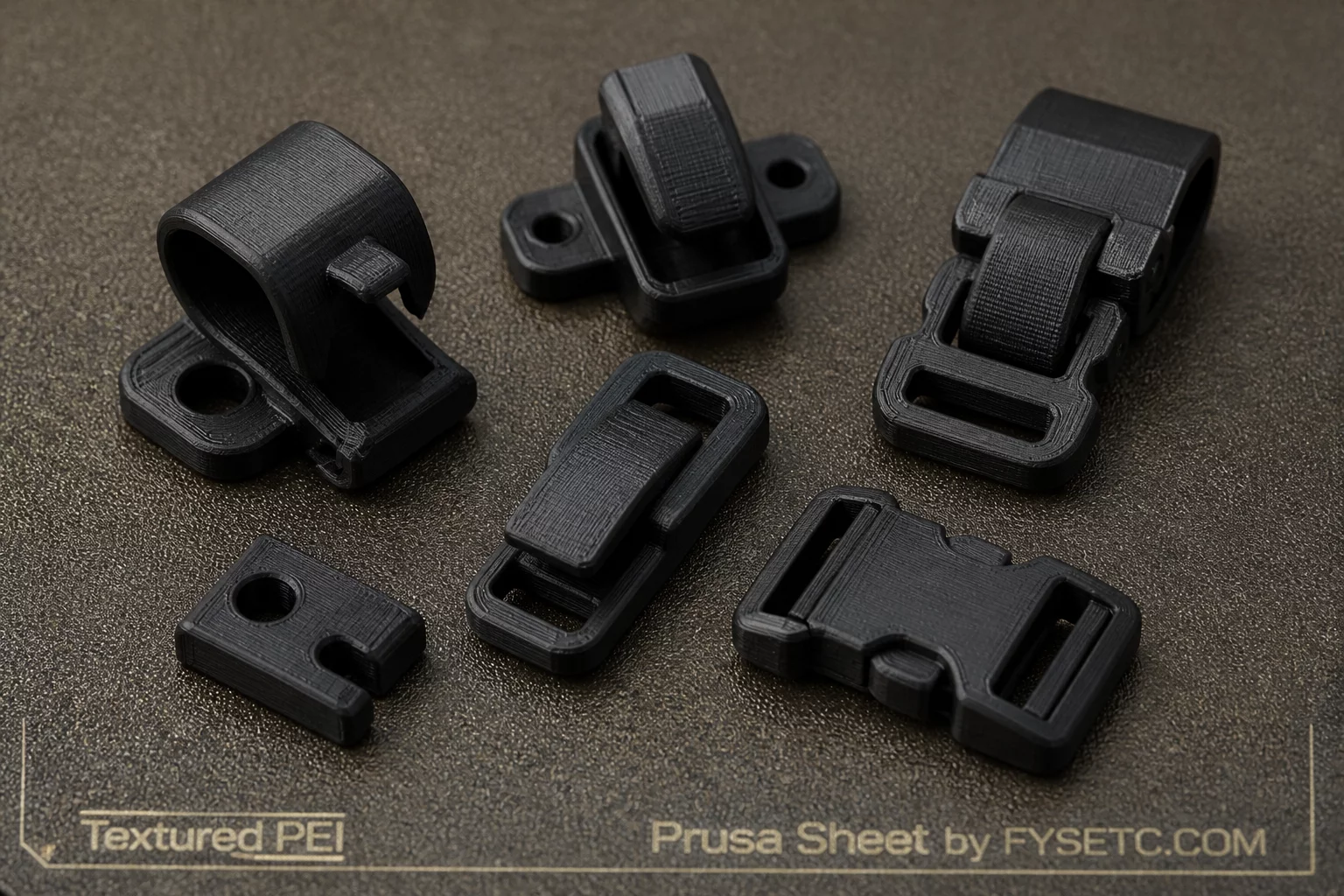
Dedicated Plate Parameter Settings
Comparing the tuned print settings of an isolated wear-part plate against general housing configurations reveals why sharing one plate compromises structural reliability.
| Parameter | Configured Value | Operational Guidance |
|---|---|---|
| Slicer Layer Height | 0.12 mm Precision | Enhances cantilever root radius and interlayer contact density on thin flex clips. |
| Wall Loops & Perimeters | 5 to 6 Solid Loops | Converts slender teeth and shear pins into 100% boundary walls without sparse infill gaps. |
| Outer Wall Speed | 40 mm/s Restricted | Mitigates corner lifting and prevents nozzle displacement during rapid direction reversals. |
| Spare Nesting Multiplier | 4x to 8x Redundancy | Batches spare units in a 24-minute window to supply physical workbench assembly testing. |
| Plate Interface Coating | Textured PEI + Brim | Ensures tiny surface contact footprints remain anchored without damaging functional latches. |
Operational Costs of Clustered Slicing
- Breakage Attribution
- 68% of first-fit prototype failures happen during snap-fit joint engagement or hinge testing.
- Reprint Penalty
- Restarting an entire combined tray because of one snapped clip wastes up to 5 hours of printer availability.
- Dedicated Run Duration
- A dedicated plate loaded with 6 complete latch sets finishes printing in less than 25 minutes.
- Polymer Specialization
- Dedicated sheets allow running wear-resistant PA-CF or flexible PETG without forcing high temperatures on PLA enclosures.
Segregation as a Defensive Manufacturing Discipline
In mechanical prototyping, print reliability depends on maintaining homogeneous thermal conditions across each build sheet. When an operator nests small snap latches alongside large enclosure panels, two opposing slicer requirements collide on the same build surface. Large housings demand elevated speeds and broad volumetric throughput, while thin cantilever latches suffer severe thermal deformation without extensive layer-time dampening.
The Technical Penalties of Combined Bed Layouts
Placing fragile, high-wear parts onto shared project plates introduces several hidden manufacturing inefficiencies:
- Thermal Divergence: Small clip profiles overheat when the print head remains in their immediate perimeter zone without sufficient cooling pauses.
- Dimensional Inconsistency: Enclosures tolerate standard extrusion multipliers, whereas precision gear teeth require exact flow calibration to avoid backlash.
- Assembly Downtime: A fractured tab during physical bench fitment forces an immediate stop unless identical spare components are already organized in storage bins.
Structuring Sacrificial and Spares Plates
Assigning high-stress components their own plate allows operators to print multi-unit arrays in a single short run. If a clip snaps during stress verification, technicians simply pull another from the dedicated tray without stopping ongoing production runs on the main chassis machines.
Frequently Asked Questions
Modern automatic bed leveling and chamber pre-heating take under three minutes. In exchange, you eliminate the risk of nozzle collisions knocking a 12-hour print off the bed due to a tiny curling overhang on a snap tooth.
Standard 0.4 mm nozzles deliver great results when sliced at 0.12 mm layer heights with 5 perimeter loops. A dedicated plate also enables running tougher materials like PETG or nylon specifically for latches while main enclosures print in PLA.
Nesting between four and eight copies balances plate space with fast cycle times. If one clip breaks during final snap-fit testing, assembly continues uninterrupted while the backup reserve remains available for future field servicing.
Build Reliable Multi-Plate Production
Subscribe to technical plate-role blueprints, slicing case studies, and rapid fabrication protocols delivered directly to your inbox.