Decoupling Common Hardware from Bespoke Geometry
Interspersing twenty identical small clips next to large structural chassis parts looks harmless in a slicer preview, but it introduces hidden bottlenecks during production. When a single delicate spacer detaches at layer forty, the entire nine-hour structural build plate gets ruined. Separating high-volume generic fasteners into independent batch plates eliminates cross-contamination, simplifies parameter tuning, and protects the throughput of critical structural ribs.
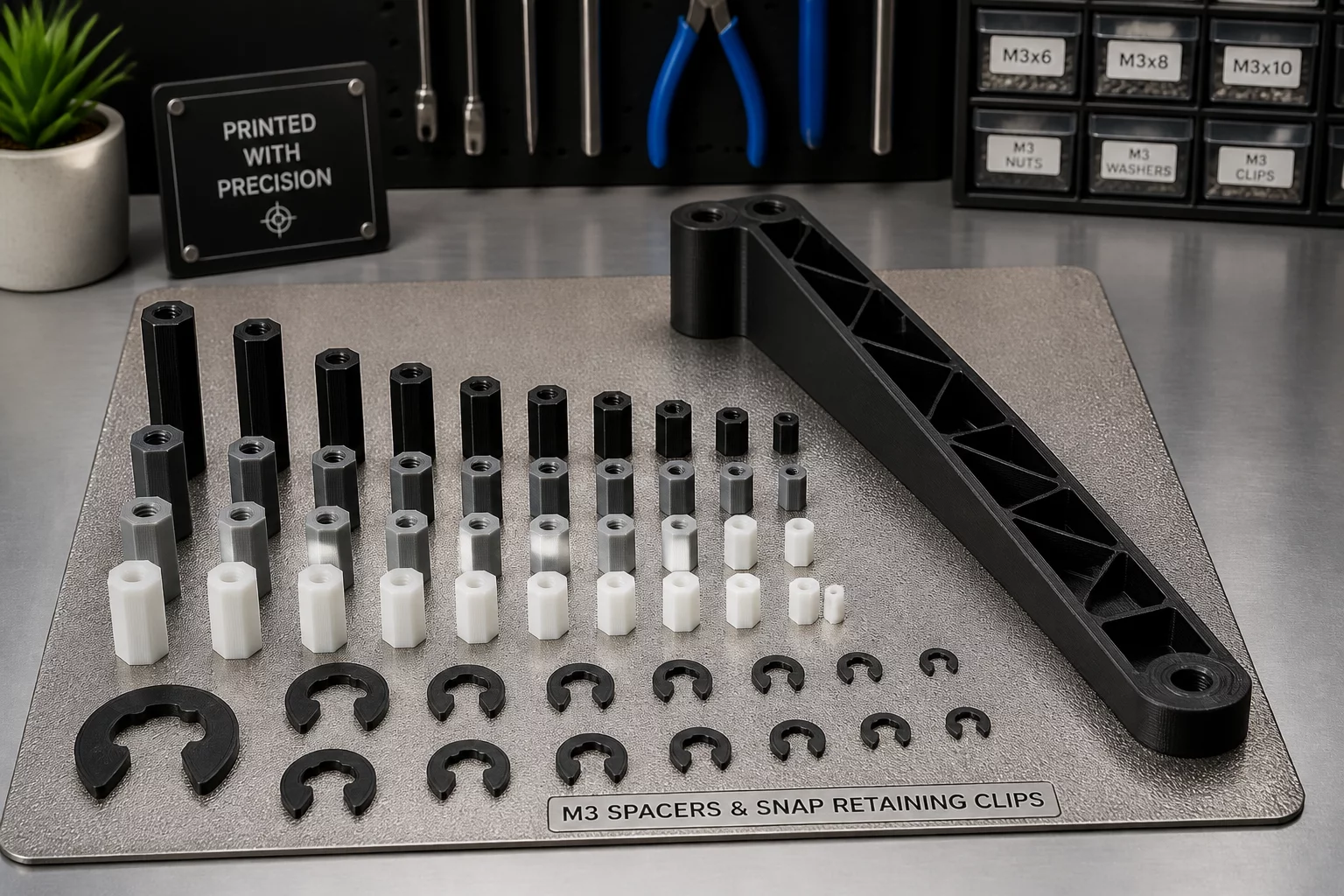
Fastener vs Structural Allocation Matrix
Review the baseline slicer parameters and operational thresholds required when separating mass-replicated generic connectors from unique load-bearing geometries.
| Parameter | Configured Value | Operational Guidance |
|---|---|---|
| Small Fastener Grouping Limit | 24 to 36 units | Keep array counts within a single plate cycle to allow rapid reprints if layer separation occurs. |
| Wall Loop Segregation | 4 to 6 loops | Fasteners demand high hoop strength while unique rib members require balanced 3-wall infill structures. |
| Minimum Layer Cooling Time | 8.0 seconds | Dedicating a plate to small spacers preserves cooling targets without slowing down large parts. |
| Bed Temperature Holding | 55°C (Smooth PEI) | Ensures micro contact areas remain anchored without excessive thermal curling on tiny surfaces. |
| Failure Blast Radius Risk | Reduced by 85% | Loose retention hardware failures are contained strictly inside short fifteen-minute recovery jobs. |
Critical Allocation Criteria
- Standardization Multiplier
- Repeated clips and M3 standoff bushings usually serve multiple subassemblies across the full device enclosure.
- Geometry Variance
- Unique structural ribs require distinct layer heights and infill densities that harm fastener thread tolerances.
- Scrap Cost Minimization
- Discarding twenty grams of failed nylon washers costs pennies compared to scrapping a 380-gram unified chassis rib.
- Post-Processing Workflow
- Hardware batches can be bulk tumbled and sorted straight into labeled component trays while primary plates cool.
Why Mixing Hardware with Large Enclosures Fails
In high-throughput fabrication shops, operators frequently cluster repeated fasteners around large structural ribs to fill empty bed space. While the visual arrangement appears efficient, the print head experiences hundreds of unnecessary retraction steps across large open spans. This excessive travel degrades nozzle pressure consistency and introduces stringing across visible outer shells. Dedicating a single plate strictly to identical retaining hardware isolates high-frequency retraction motions onto a confined bed quadrant.
Optimizing the Hardware Tray Build Plate
Standardized hardware parts such as snap clips, retention shims, and standoffs function best under consistent thermal conditions. When small items print in isolation, the slicer can maintain uniform volumetric speeds and aggressive cooling without compromising the heat retention needed for thick load-bearing ribs.
- Print fasteners with concentric surface patterns to eliminate seam stress points on cylindrical perimeters.
- Group identical M3 spacers in tight rectangular clusters spaced twelve millimeters apart to shorten travel distance.
- Apply brim contours exclusively to tiny standoffs without forcing unwanted brim removal onto large finished ribs.
Assembly Bench Sorting and Staging Advantages
Removing a dedicated fastener plate yields an entire bin of ready-to-use hardware in one continuous motion. Assembly technicians grab standardized clips from designated organizers rather than peeling tiny spacers from around cumbersome chassis frames. If a clip snaps during physical fit-up, the operator simply re-runs the hardware plate without tying up printers scheduled for full-scale chassis manufacturing.
Frequently Asked Questions
Total active printing time remains nearly identical because travel distances decrease. The major time savings occur by preventing multi-hour chassis scrap whenever a tiny fastener detaches midway through a combined print job.
Sequential object printing requires wide extruder toolhead clearances that consume substantial bed space. Grouping all identical fasteners onto their own dedicated layer-by-layer plate is much denser and avoids gantry collision limits.
Adding a fifteen to twenty percent surplus on small clips and standoffs protects workbench assembly momentum. Extra fasteners cost negligible filament and safeguard against accidental floor drops or snap fractures.
Receive Advanced Build Plate Protocols
Subscribe for technical breakdowns on slicing architecture, plate isolation strategies, and multi-part project management.