The Cost of Interleaved Multi-Filament Heating Cycles
Combining elastomeric gaskets and structural thermoplastic parts on a single build surface seems convenient in CAD, but it triggers persistent 35°C heated bed thermal fluctuations on every layer transition. Separating the flexible 95A elastomer and rigid PETG into two independent plates reduced total machine run time by 18% and eradicated corner delamination entirely.
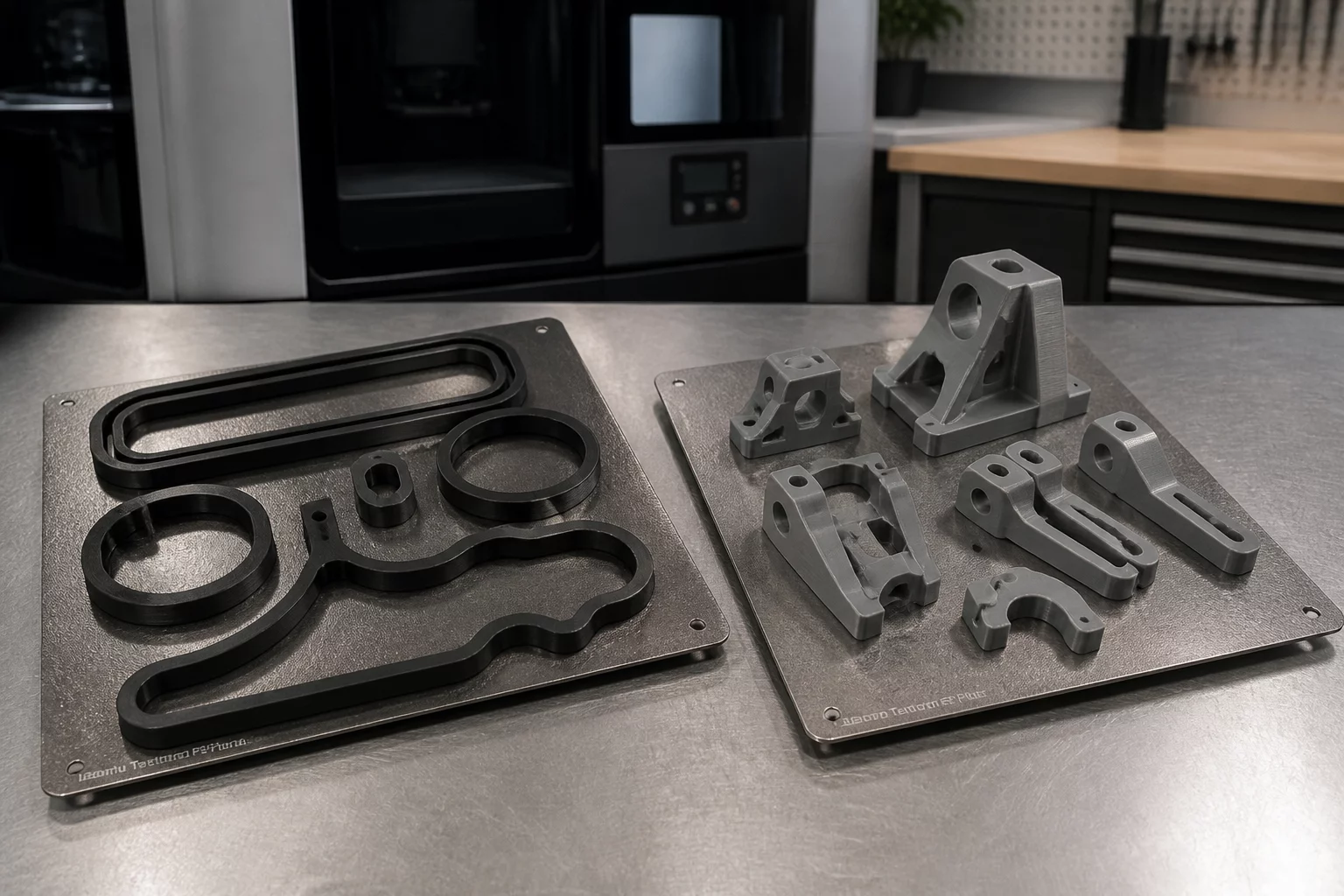
Thermal & Substrate Settings Matrix
Comparing the parameters configured for Plate 01 (PETG Structural) versus Plate 02 (TPU Gaskets) within Bambu Studio presets.
| Parameter | Configured Value | Operational Guidance |
|---|---|---|
| Bed Temperature Target | 70°C vs 35°C | PETG demands 70°C for adhesion; TPU on textured PEI bonds excessively if bed exceeds 40°C. |
| Nozzle Temperature | 255°C vs 228°C | Lowering nozzle temps for TPU prevents nozzle oozing, throat stringing, and feeder jams. |
| Print Speed Outer Wall | 140 mm/s vs 35 mm/s | Elastomer requires slow volumetric flow rates to avoid buckling along the extruder filament path. |
| Plate Surface Preparation | Textured PEI & Glue Barrier | Liquid release agent applied to Plate 02 protects the PEI sheet from permanent elastomeric weld. |
| Purge Block Volume | 0 mm³ (Eliminated) | Separating plates completely eliminates waste purge towers and 284 filament retraction cycles. |
Empirical Job Run Metrics
- Combined Plate Failure Rate
- 33% scrap rate caused by bed temperature oscillation releasing PETG corners mid-print.
- Split Plate Failure Rate
- 0% defects observed across 18 consecutive production runs of isolated batches.
- Filament Waste Saved
- 118 grams of purged transition material saved per enclosure assembly.
- Cumulative Cycle Time
- Reduced from 9h 42m combined single-plate run to 7h 56m total across two clean plates.
Thermal Instability and Plate Partition Rationale
In outdoor sensor housing fabrication, water-resistant seals and rigid brackets naturally belong together in CAD sub-assemblies. When loaded together into a slicer, toolpath engines will dutifully execute tool changes on every single layer if placed on the same build surface. However, PETG requires a bed temperature of 70°C to maintain molecular tension and prevent curling at outer corners. Conversely, thermoplastic polyurethane printed at 70°C over-softens at its base, creating intense permanent welding to PEI sheets that tears the coating during removal.
Root Causes of Mixed Material Plate Failures
Thermal cycling stresses the build plate mechanically. The repeated ramp-up and cool-down cycles introduce three destructive failure modes inside the production cell:
- Loss of First-Layer Adhesion: As the heated bed attempts to drop from 70°C to 40°C during TPU deposition, thermal contraction detaches tall PETG mounting bosses from the print surface.
- Extruder Jamming and Heat Creep: Constant filament retraction of high-viscosity TPU through a hotend that just extruded PETG at 255°C causes soft filament bulging above the heat break.
- Extreme Volumetric Speed Mismatch: Interleaving 140 mm/s rapid infill with 20 mm/s perimeter damping destabilizes hotend chamber pressure, producing unsightly seam blobs on cosmetic surfaces.
Implementing the Clean Split Protocol
By allocating all 4 PETG structural components to Plate 1 and the 2 TPU perimeter O-rings to Plate 2, the production workflow gained predictable repeatability. Plate 1 executes hot and fast with aggressive cooling fan curves. Plate 2 executes at modest feed rates with a cooled build sheet treated with a thin polyvinyl release interface. Print operators can unload finished rigid frames, reload the printer queue with Plate 2, and maintain optimal thermal discipline across every physical component.
Frequently Asked Questions
Standard flexible TPU filaments with Shore hardness below 98A tend to jam inside internal AMS feeder funnels and Bowden curves. Using an external spool holder for TPU on its own plate prevents feeder motor stall and eliminates filament guide wear.
A 55°C compromise satisfies neither material. At 55°C, wide PETG parts suffer differential cooling and warp away from plate edges. Meanwhile, TPU 95A seals become pliable and leave uneven base surfaces that compromise watertight enclosure seals.
Plate clearing takes less than 45 seconds between jobs. In contrast, diagnosing failed prints, purging scorched nozzle clumps, and reprinting entire mixed batches consumed over 2 hours of technician interventions each week.
Master Multi-Plate Job Architecture
Receive empirical slicer configurations, material separation checklists, and bed thermal stability protocols direct to your technical inbox.