Packing Every Square Centimeter Created Forty Minutes of Sorting Chaos
Maxing out build plate real estate feels efficient until the print finishes and the bench turns into an unlabelled puzzle. During an assembly run of five sensor enclosures, packing seventeen near-identical brackets, mirror-imaged clips, and subtle riser variations onto a single plate saved machine warm-up time but cost forty minutes of tedious calipers-in-hand sorting.
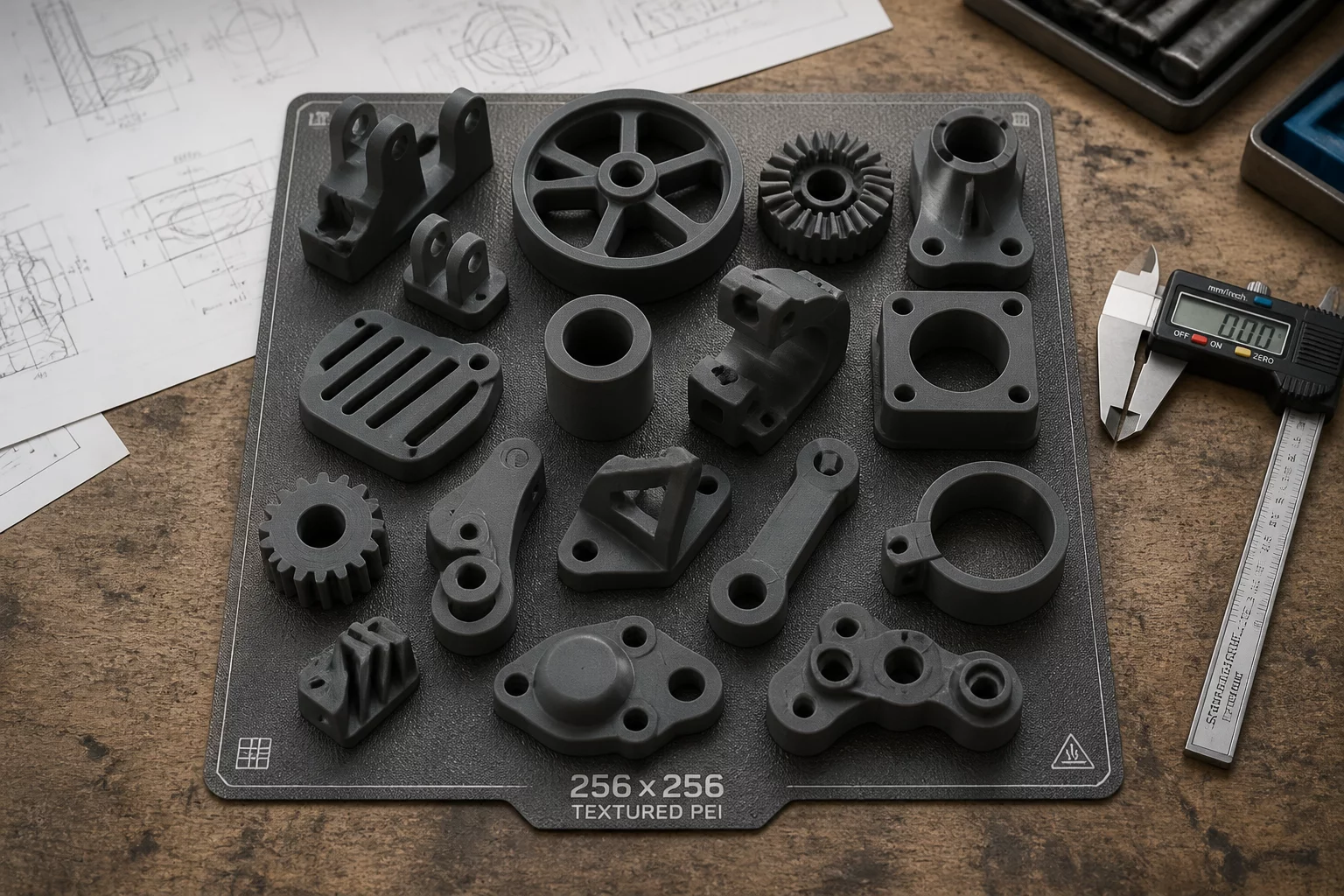
Build Metrics & Post-Processing Time Breakdown
Comparison between the packed single-plate batch and the split two-plate role configuration across printing and bench staging.
| Parameter | Configured Value | Operational Guidance |
|---|---|---|
| Build Plate Part Count | 17 components | Squeezed onto a 256x256 mm build surface with under 6 mm separation between distinct geometries. |
| Print Duration (Single Job) | 7h 24m | Saved one bed heating cycle and nozzle purge sequence compared to multi-plate scheduling. |
| Post-Print Identification Time | 41 minutes | Required manual digital caliper verification to distinguish mirrored left/right mounting lugs. |
| Assembly Error Incidents | 2 cross-matched pairs | Symmetrical appearance masked a 0.8 mm fastener offset, resulting in forced fit and broken boss threads. |
| Resolution Protocol | 2-Plate Role Split | Stage 1 sub-assemblies on Plate A, Stage 2 fastening anchors on Plate B, dropping bench sorting to 4 minutes. |
Operational Observations from the Shop Floor
- Total Time Lost in Sorting
- 41 minutes spent comparing 3D models against printed parts before hardware insertion.
- Geometric Ambiguity Risk
- 4 parts shared identical bounding footprints with concealed internal bore variances.
- Bed Adhesion Risk Factor
- Edge curling on peripheral parts went undetected due to visual clutter on the heated bed.
- Net Efficiency Outcome
- 18 minutes saved on machine runtime resulted in a 41-minute deficit during manual bench assembly.
The False Economy of the Maximum Density Print Plate
Slicer auto-arrange algorithms optimize exclusively for bounding boxes and perimeter boundaries. When technicians select auto-arrange with 3 mm spacing, the slicer produces an aesthetically pleasing, densely tiled tray of plastic. However, the machine software has no understanding of physical assembly stages, part chirality, or the cognitive burden placed on the operator who pulls the hot sheet off the bed.
Where Clustered Layouts Cause Workshop Confusion
Examining the aftermath on the workbench revealed three critical failure points that consistently recur when multi-part builds are compressed onto a single plate without logical segregation:
- Mirror-Image Confusion: Left-hand and right-hand cable retainers differed only by a recessed guide slot, requiring microscope-level inspection to separate into bins.
- Hidden Failure Cascades: A minor perimeter flaw on an auxiliary clip spread stray stringing into the seam of an adjacent structural bracket, degrading surface finish.
- Disordered Build Sequences: Fastening hardware arrived after the primary housing was ready, forcing parts to sit idle across the assembly bench while awaiting secondary prints.
Implementing Plate-Role Segregation as Standard Operating Procedure
Separating the project into two distinct build plates based on functional assembly stages completely eliminated sorting bottlenecks on the second production run. Plate 1 carried base structural hulls and captive nut housings, allowing bench assembly to begin immediately upon completion. Plate 2 produced the mirrored retainer clips and exterior covers. While two print jobs required an extra 12 minutes of machine bed heat cycling, assembly completion time dropped by 37 minutes overall.
Build Plate Organization & Slicing Strategy
Auto-arrange minimizes bed area usage without considering assembly sequencing or part chirality. It often scatters paired components across opposing corners, turning post-print sorting into a manual puzzle.
Dense single-plate jobs make sense only when printing identical, interchangeable components—such as twenty identical spacers or cable clips—where individual part identification is irrelevant to assembly.
In production benchmarks, stage-based plate grouping reduced bench staging and component verification time by over 75%, easily outweighing the extra 10 to 15 minutes of machine warmup cycles between plates.
Streamline Multi-Plate Assembly in Your Print Shop
Subscribe to technical post-mortems, plate organization strategies, and practical slicer templates delivered monthly without promotional fluff.